

Kitchen backsplash ideas play a crucial role in both function and design. At Pivot, we see the kitchen backsplash as more than just a wall behind your stove or sink — it’s where material, performance, and personality come together. It’s both a functional surface and a visual element—a place where design meets daily living. A backsplash is where practicality, materiality, and personality converge, reflecting how a home is used while adding character to the space.
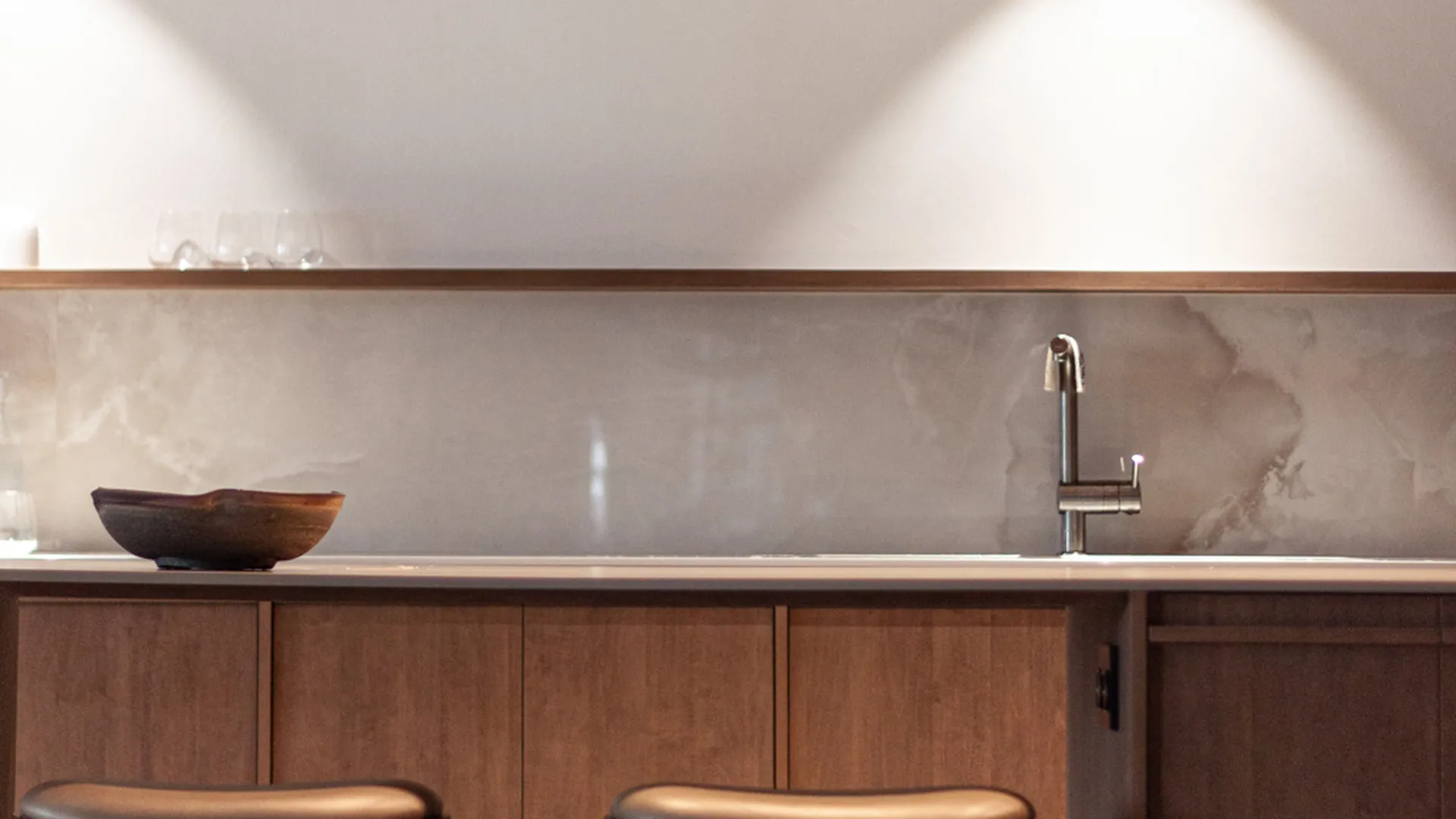
A backsplash should respond to its function. Ask yourself: What will happen here? How messy will it get?
Cooking surface – If it’s behind the stove or primary prep area, go flat, clean, and seamless. Materials like sintered stone, quartz, or stainless steel make cleaning easy and prevent oil or turmeric stains from settling. In Singapore’s Asian kitchens, where stir-fries and oily cooking are common, a smooth, wipeable surface is essential. We particularly like Lian Hin’s Vulcan range for its durability and muted elegance.
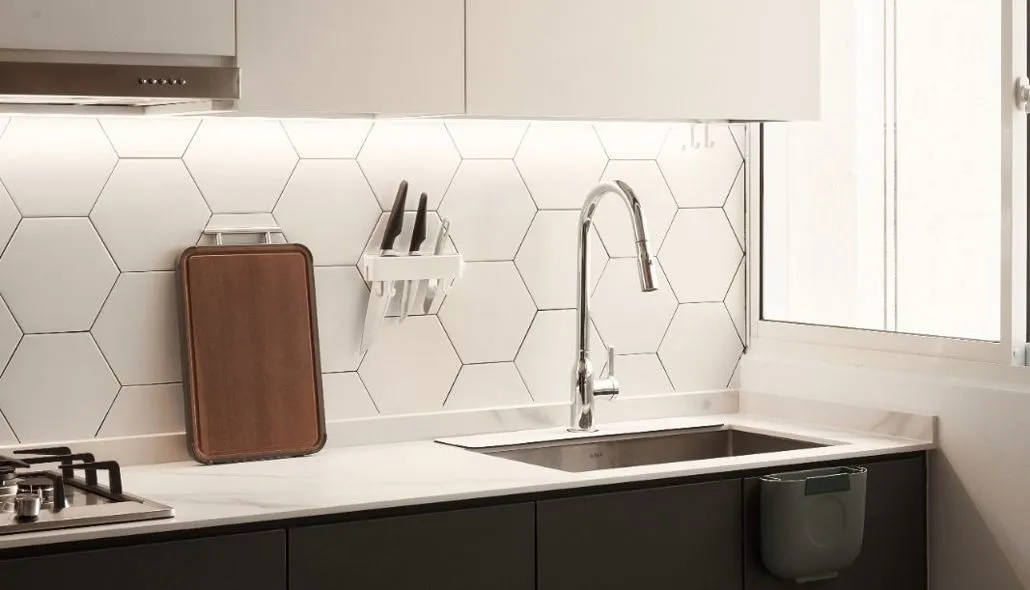
Photo Credit: Lian Hin
Non-cooking surfaces – Walls near beverage stations, water filters, or secondary prep areas don’t need ultra-smooth finishes. Tiles, mosaics, laminates, or even decorative stone panels work beautifully here. Brands like KompacPlus are trendy with young homeowners and come in interesting finishes—but take note: its thin black profile may feel stark if it contrasts too strongly with your interior.
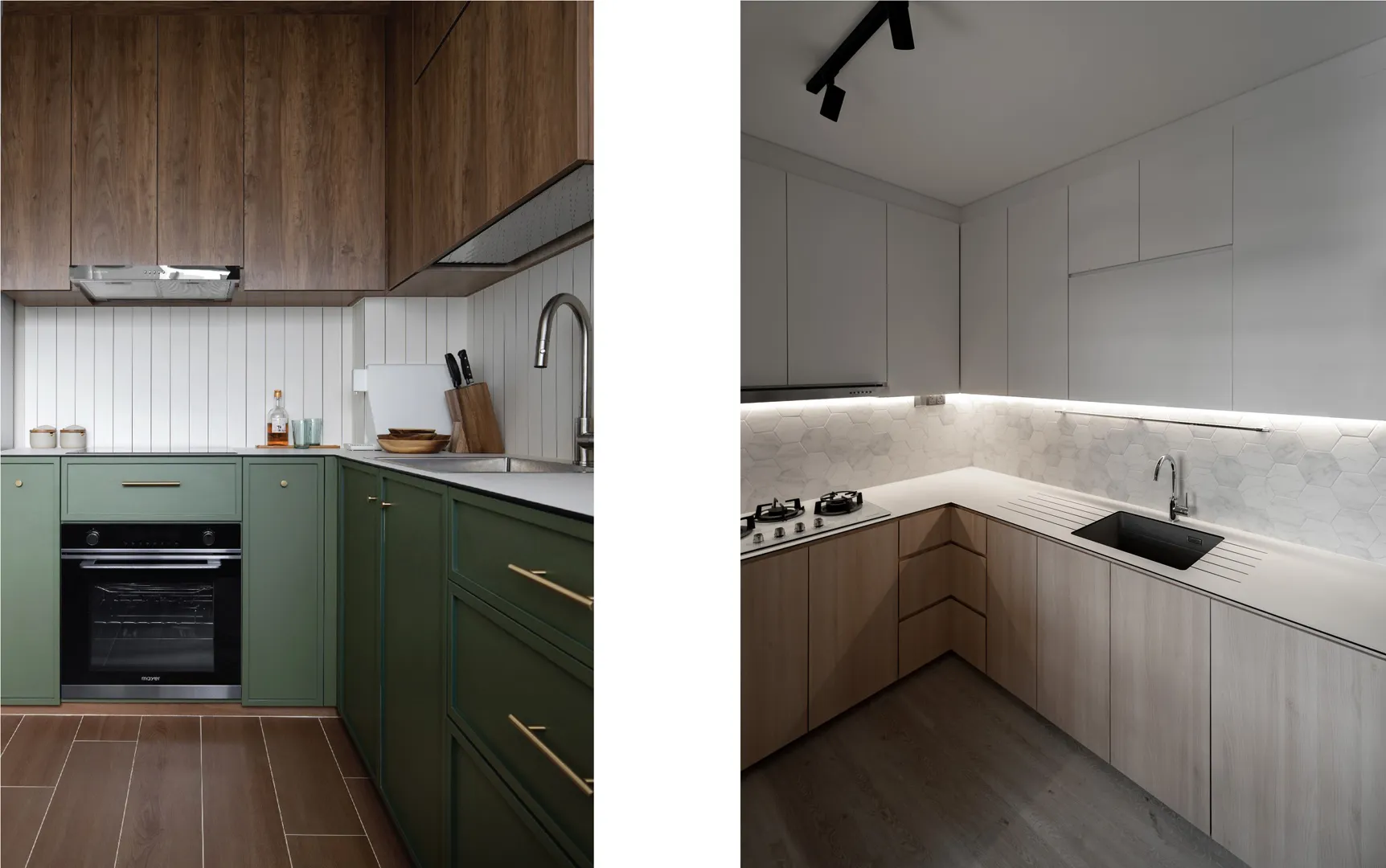
Photo Credit: KompacPlus
Sintered or engineered stone – Ideal for heavy cooking, resistant to staining from turmeric, sauces, or oils. We also love Consentino, which we used at our project at 126 Bukit Merah View; their showroom at Marina Bay Sands is inspiring (but parking can be a challenge!).
Laminate or quartz – Perfect for light cooking or European-style kitchens, offering durability and subtlety.
Tiles and mosaics – Great for accent walls, pantry spaces, or beverage stations. Mix formats, play with grids, or combine tiles for a unique look. Mother-of-pearl tiles or small-format Peranakan-inspired tiles can add personality without overwhelming the space.
Heritage and nostalgia – Old Peranakan tiles or coffee shop-style ceramic tiles can reference local culture while giving a playful twist.
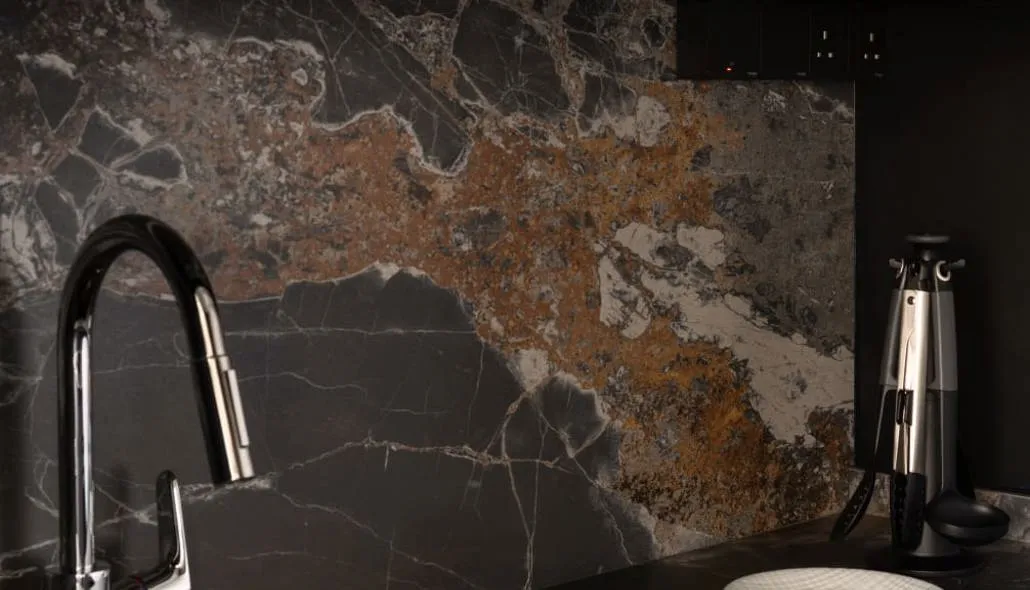
Photo credit: Lian Hin
In our project at Tiong Bahru, the kitchen was used for simple stews and light daily cooking. We kept the backsplash mostly white and minimal, adding a small Peranakan-inspired tile inset for personality. The mix of simple and decorative surfaces created visual interest while keeping cleaning easy.
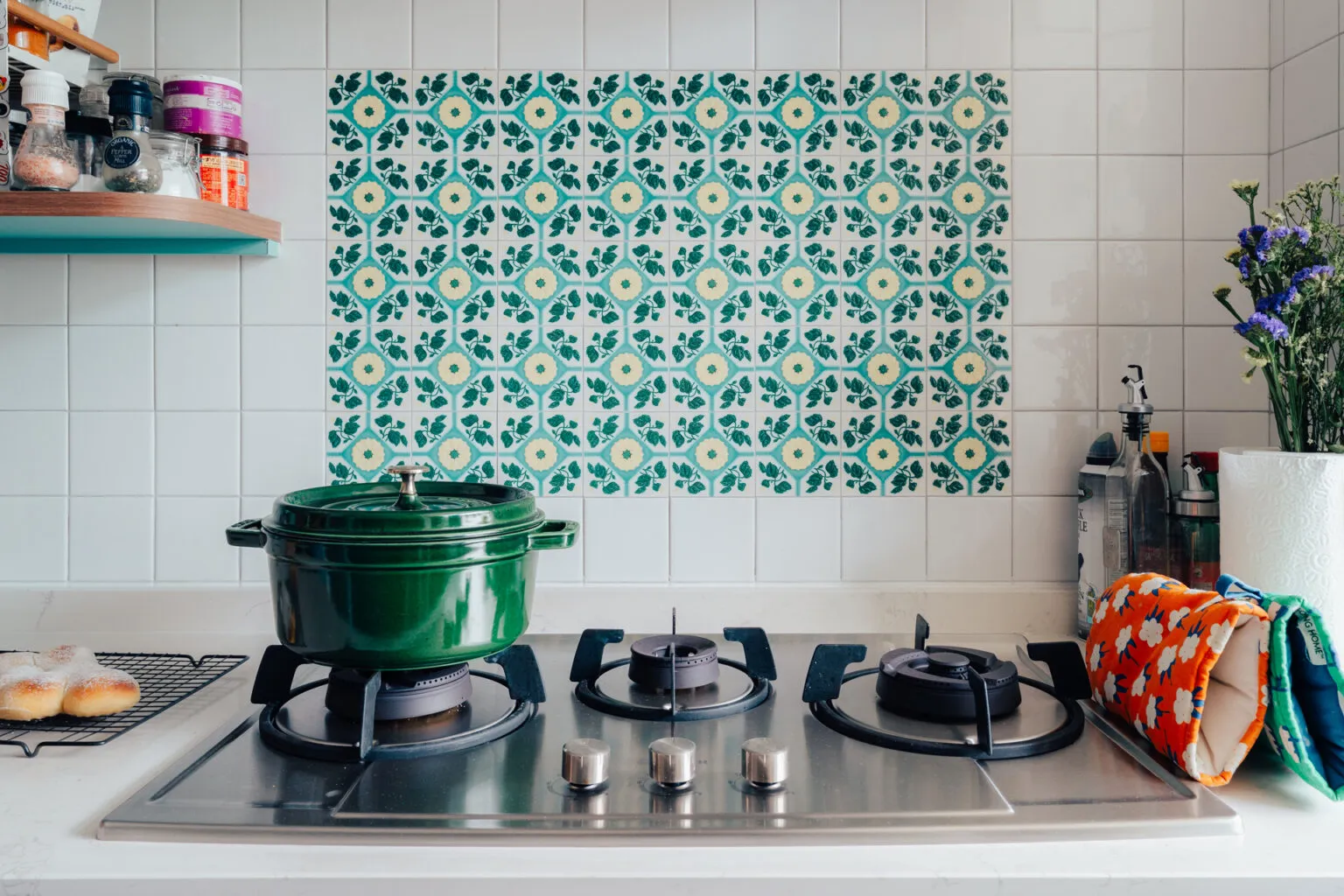
We often encourage clients to think of the backsplash as vertical property: it’s an opportunity to layer textures, patterns, and colors in a way that’s visible yet functional. A backsplash can become a playful grid of tiles, a subtle texture behind cabinetry, or even a statement with inset designs.
Let function lead – Determine where mess will happen and choose materials accordingly.
Mix and match – Combine tiles, mosaics, or stone with simple surfaces for a balanced aesthetic. Consider materials like Lian Hin Vulcan for durability or KompacPlus for trendy finishes.
Think vertically – A backsplash is a visual property; use it to guide the eye and add texture to the space.
Incorporate heritage or personal touches – Mother-of-pearl panels, Peranakan tiles, or coffee shop ceramics can give your kitchen a story.
Keep maintenance in mind – Smooth surfaces behind heavy cooking areas make cleaning effortless. Decorative sections can be more playful.
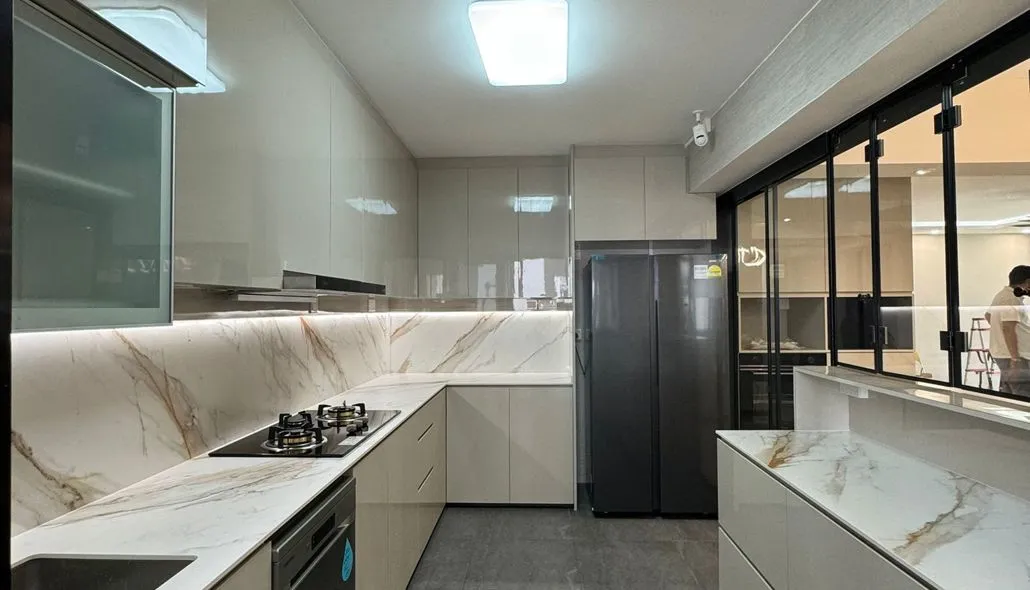
Photo Credit : Lian Hin
A kitchen backsplash bridges function and form. It protects your walls, makes cooking easier, and allows for a design expression that reflects how you live. At Pivot, we approach backsplashes as layered surfaces—practical, beautiful, and tailored to the rhythm of daily life.