

At Pivot, we see the dry kitchen not just as a cooking area—it’s a functional extension of your home. Unlike a wet kitchen, which handles heavy cooking and water-intensive tasks, the dry kitchen is meant for light prep, storage, and display. In Singaporean homes, where space is precious, a well-designed dry kitchen becomes a versatile, practical, and even aesthetic part of daily life.
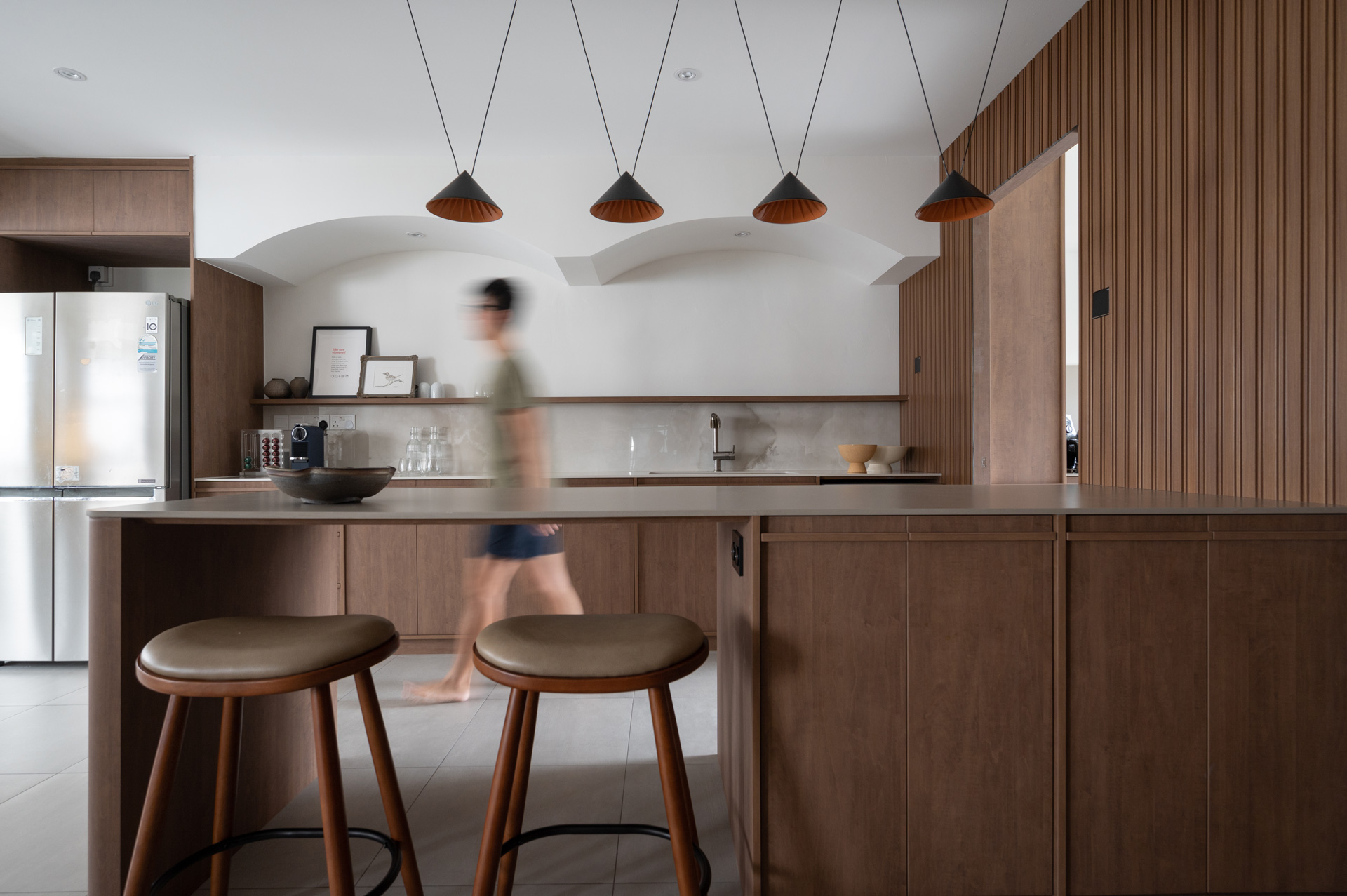
A dry kitchen is designed to handle dried goods and items with longevity. Think rice, noodles, canned goods, and spices—ingredients that don’t need immediate refrigeration. It’s also the perfect space to store and display dining cutlery and collectable plates. In Singapore, we see a growing interest in pottery and artisanal tableware, and a dry kitchen can become a curated area that showcases these pieces. A dedicated plate cabinet can maximize storage while keeping everyday dishes accessible.
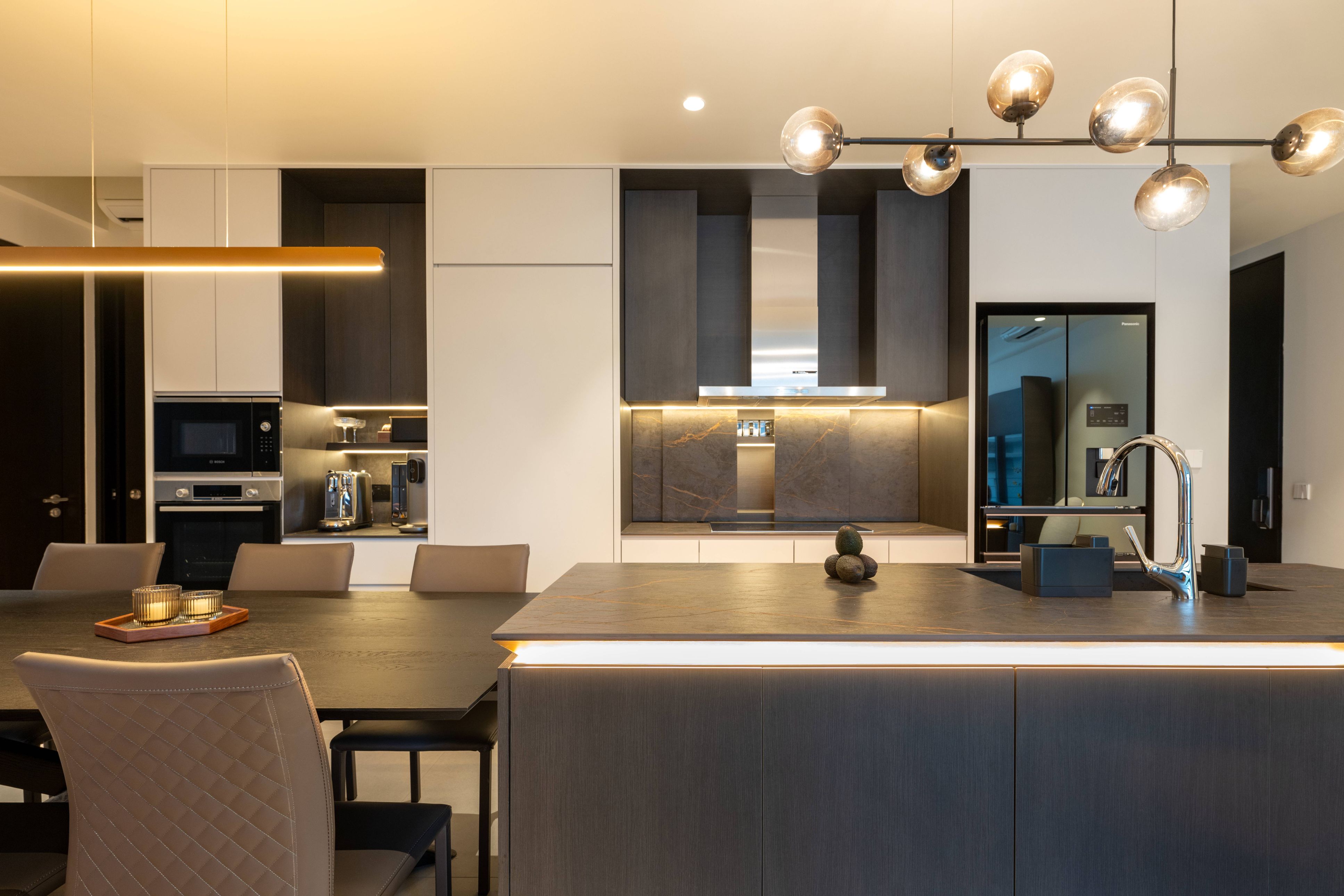
Many Singaporean homes blend the function of a dry kitchen with a dry pantry, creating storage for baking equipment, small appliances, or specialty items like wine. With careful planning, the dry kitchen can also double as a dry island, a central transitional space for light meal prep, breakfast, or casual gatherings.
Storage First
A dry kitchen should feel spacious and uncluttered. Everything should have a place—from spices to utensils. Singaporean kitchens are often compact, so organizers, trays, and drawer dividers help maintain order. Stock planning is essential: only keep what you use frequently, and avoid overbuying.
Versatile Functionality
While the wet kitchen is for messy cooking, the dry kitchen supports light washing, prepping, and plating. Including a small sink can be handy for washing fruits, mugs, or quick rinses without bringing moisture to your dried goods.
Display and Personality
A dry kitchen is an opportunity to showcase design and personality. Open shelving or glass-front cabinets can highlight pottery, collectible plates, and artisanal jars. This makes the space both functional and visually interesting.
Integration with Pantry and Appliances
For Singaporean homes, dry kitchens often intertwine with pantry functions. Consider using a storeroom or a dedicated pantry for larger appliances, baking gear, or multiple fridges. Some homeowners opt for separate fridges for meats, vegetables, or wines—functional if a bit indulgent.
Clutter-Free Mindset
A dry kitchen thrives on simplicity. Keep countertops clear, use designated trays for prep, and assign storage zones for ingredients, utensils, and appliances. This approach keeps the space practical while highlighting its aesthetic appeal.
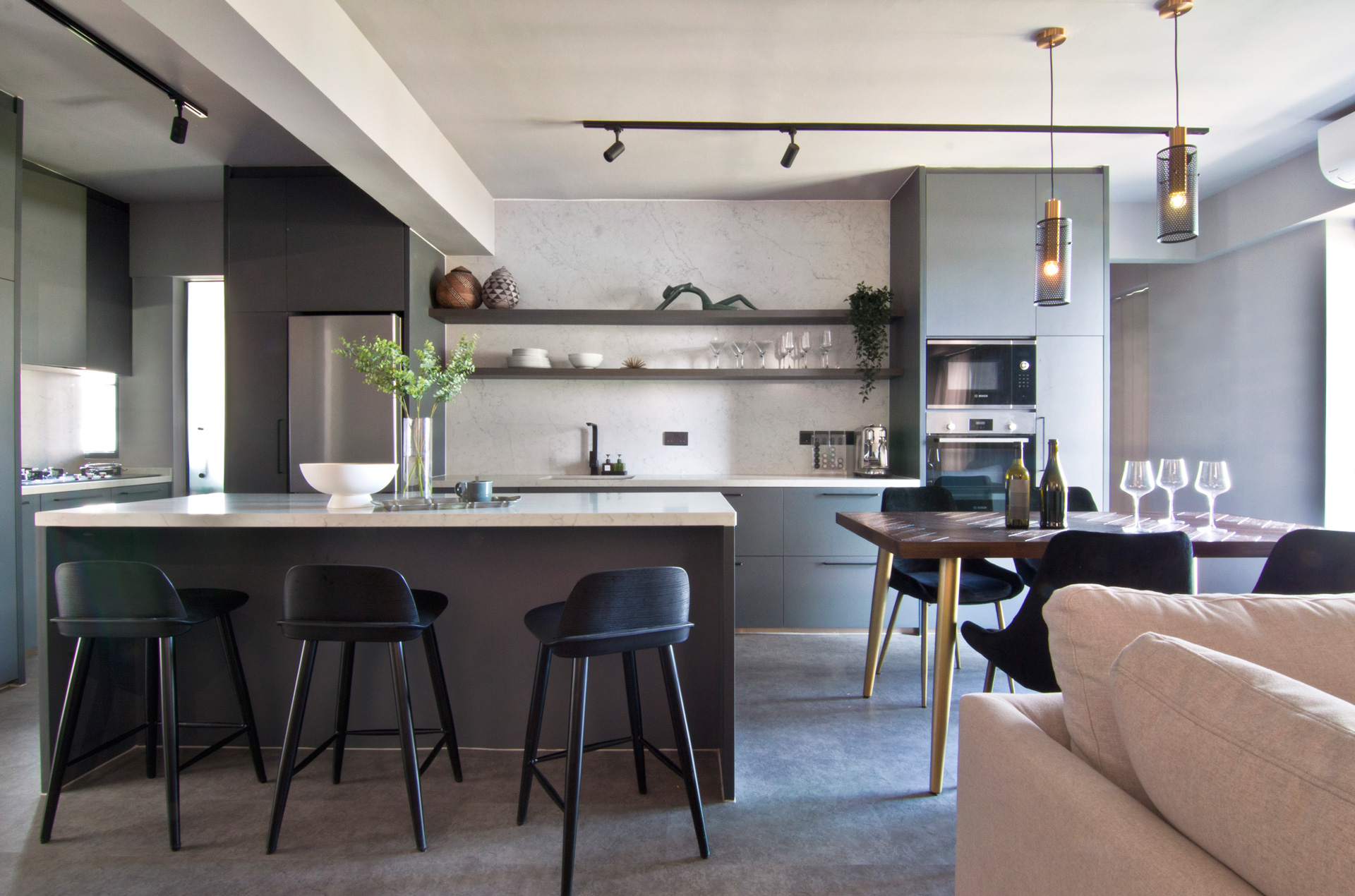
Singaporean kitchens require clever planning and adaptability. With compact floor plans and humid climates, a dry kitchen helps separate moisture-heavy cooking from storage and prep areas. It’s a practical solution for homes that value organization, longevity of ingredients, and functional design.
At Pivot, we approach dry kitchen design as a blend of form and function. By integrating storage, prep, and display, a dry kitchen becomes a central, clutter-free, and visually appealing space—a small but essential part of modern Singaporean living. Check out our mid-century interior design article too.