

In Singapore’s F&B Design Trends 2026 scene the challenge is real. Costs for rent, labour and fit out are pushing many operators to their limits. In 2024 around 2,465 F&B businesses closed in the first nine months alone (Source: knightfrank). For us at Pivot designing F&B spaces in 2026 means being bold enough to lean into trends but smart enough to respect budget, yield and brand integrity.
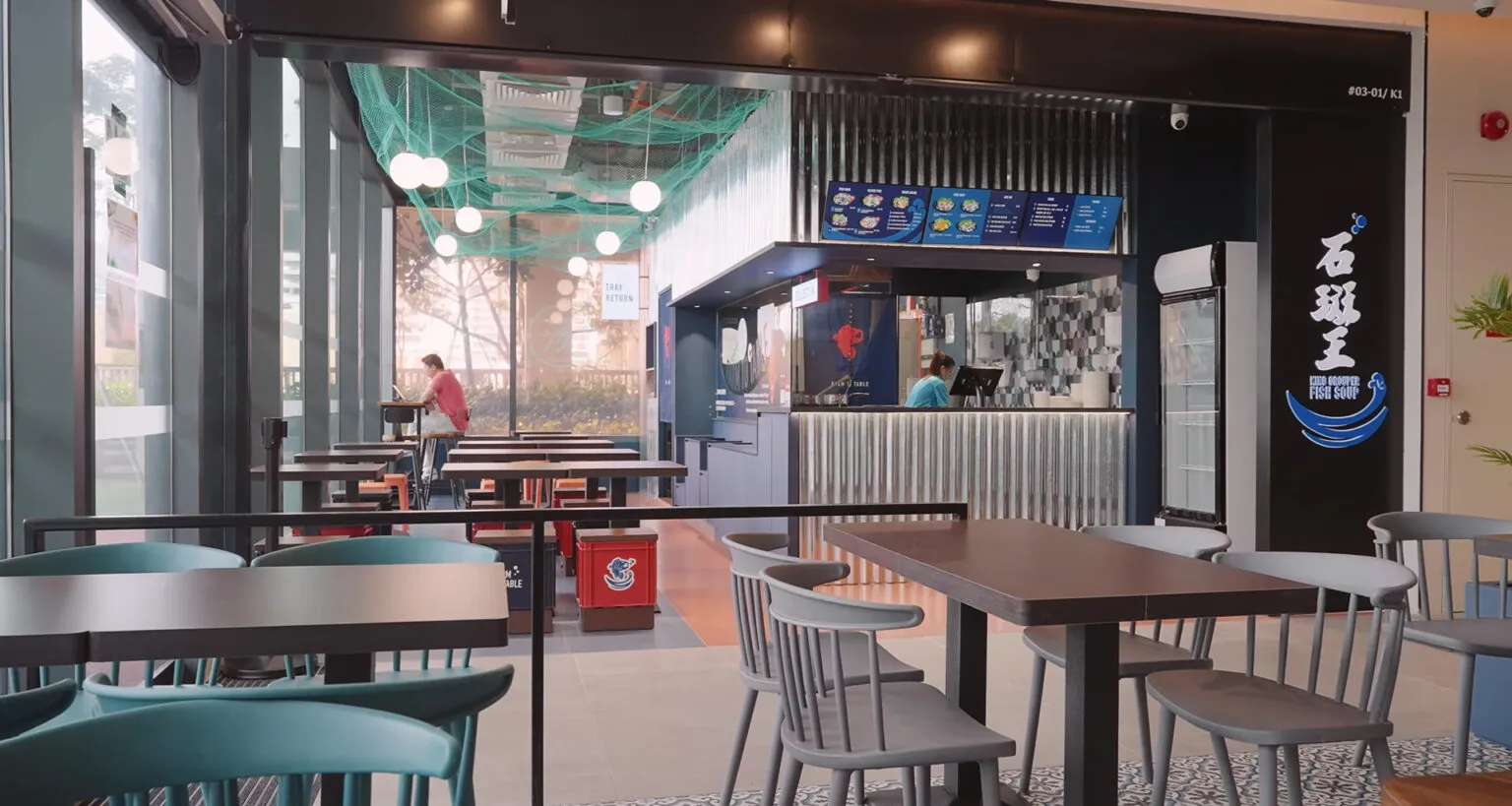 A budget-friendly design that uses simple, affordable materials to create a clean, modern space reflecting King Grouper’s honest and approachable brand story.
We often say great design doesn’t always mean high cost. It means clarity of purpose, good flow and a space that reflects the brand while working hard for the business.
1. Opportunity in Existing Spaces
Given high start up and fit out costs, taking over a previously fitted space is a savvy move. Existing kitchen, exhaust and service infrastructure can slash costs. It frees budget to invest in brand expression and guest experience instead of structural works.
2. Narrative Driven Interiors and Brand Storytelling
Restaurants are no longer just about the food. Trend reports highlight immersive spaces as key differentiators. (Source: dda) For example we might trade full marble walls for a mix of modest finishes with one standout wall, one craft installation, one signature lighting piece. Just enough to create memorable atmosphere without overspending.
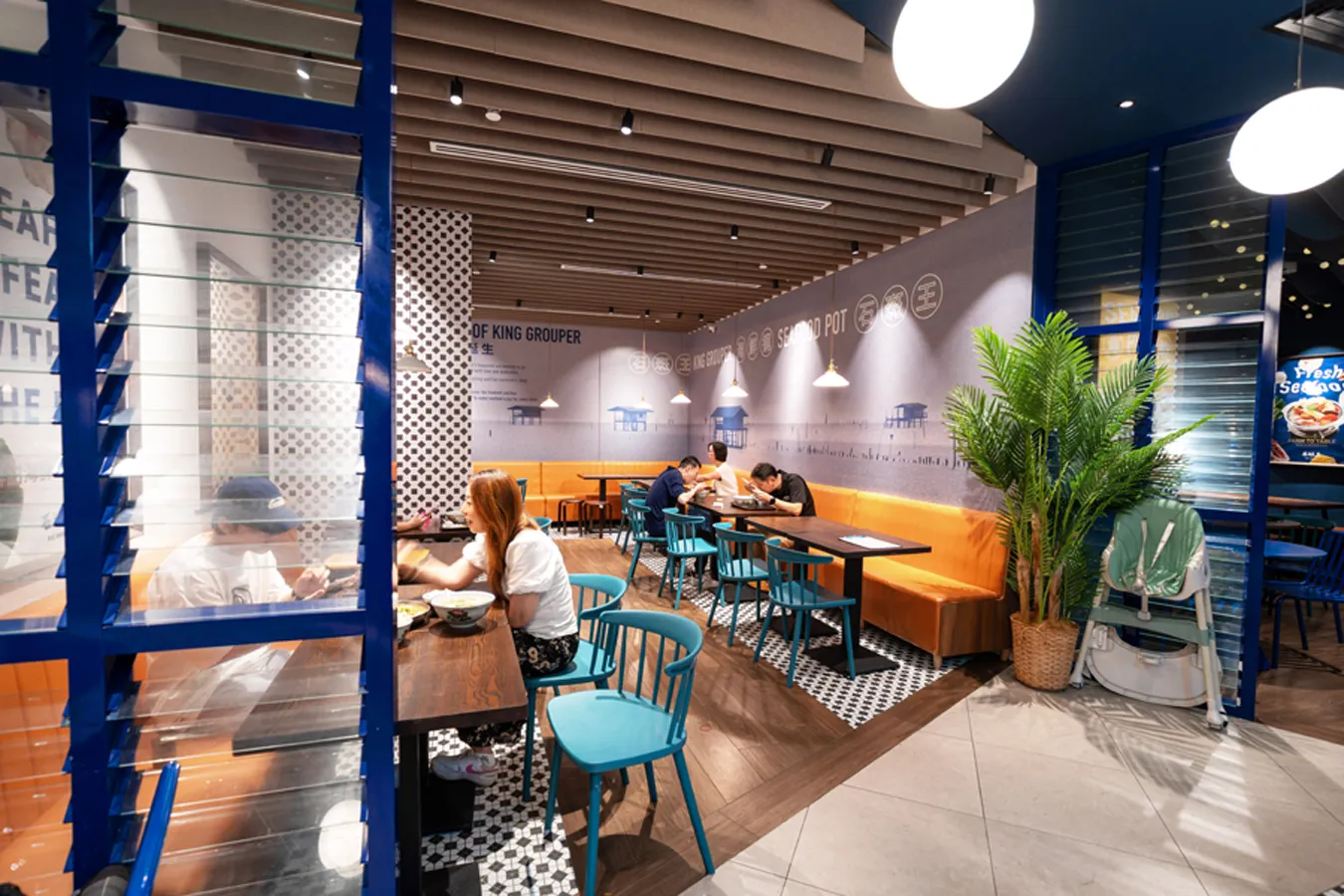 A cozy, coastal-inspired King Grouper outlet that combines bold blue accents and warm tones to create an inviting, memorable dining experience.
3. Hybrid Use and Multi Modal Layouts
Delivery, take away, dine in: all operate in parallel. Trend research shows F&B spaces are evolving to support multiple modes: meal service, work friendly café, event zone. (Source: kitadesign) To make this work in Singapore you might incorporate efficient service flow, flexible seating, and storage or display to serve multiple functions without chaos.
4. Smart Use of Technology
Technology is now part of the F&B design, not as showy screens but as enablers: order kiosks, QR check in, payment integration, reservation flows, smart lighting and AC. When done right it supports operations, guest experience and keeps you competitive. (Source: study-hospitality)
5. Material Strategy: Durable, Sustainable and Cost Conscious
Material costs and labour rates are rising. Trend research emphasises materials that look premium but last and are easy to maintain. (Source: officereno) At Pivot we advocate for strategic finishes: tough surfaces at service zones, feature materials at guest zones, reuse or upcycle where possible.
At Broadway Coffeeshop, a boldly painted ceiling adds vibrant character to the space—an effective, low-cost way to achieve strong design impact.
6. Flexible, Modular Furniture and Zones
With uncertainty in demand, seating layouts and usage must adapt. Stackable chairs, convertible booths, fold away tables let you handle high or low traffic without a full refit. This flexibility protects your investment.
For one of our clients, we worked out that big budgets didn’t always buy better brand expression. Instead we used smart touches: up cycled beer crates into bar stools, fish nets hung as ceiling décor, furniture sourced from cheaper markets. The brand story came through clearly, the space felt cohesive, and cost was kept in check.
The lesson: creative design thinking often outperforms heavy spend.
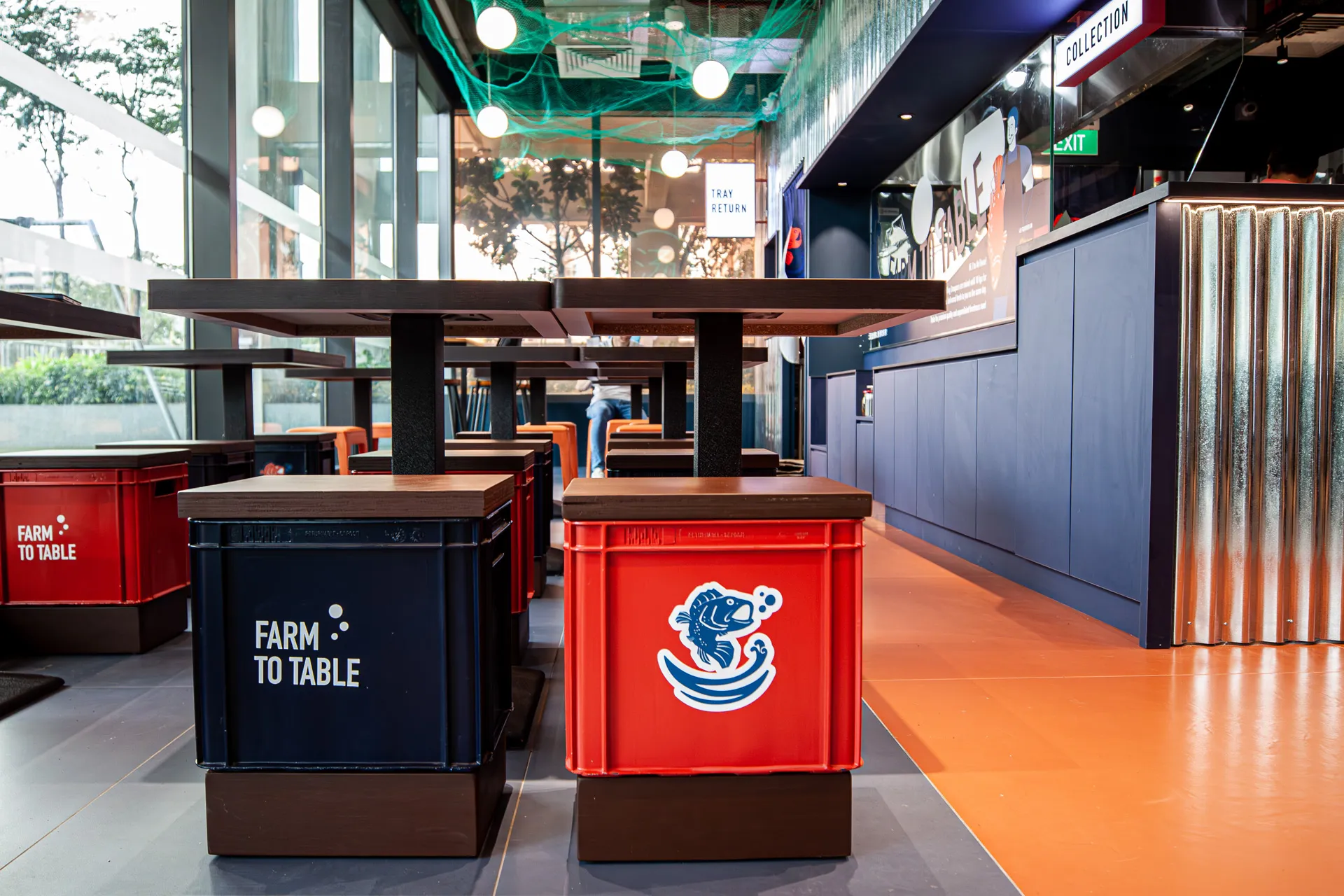 An inventive, low-cost design that upcycles beer crates, fish nets, and simple furnishings to create a cohesive space with strong brand storytelling.
F&B design in 2026 needs to be smarter, not simply shinier. In Singapore’s high cost environment, spaces must function, tell a story, and adapt. At Pivot our focus is on creating F&B interiors that reflect brand, support operations and respect budget. Trends give direction. Function and context make the space sustainable.
If you’re planning your next outlet or revamp, we’d be happy to share a check list of cost effective design strategies for F&B that reflect these 2026 themes.